Summary
Table of Content

Inflammatory Bowel Disease Treatment Market
Get a free sample of this report
Thank you!
Your inquiry has been received. Our team will reach out to you with the required details via email. To ensure that you don't miss their response, kindly remember to check your spam folder as well!
Form submitted successfully!
Error submitting form. Please try again.
Request Sectional Data
Thank you!
Your inquiry has been received. Our team will reach out to you with the required details via email. To ensure that you don't miss their response, kindly remember to check your spam folder as well!
Form submitted successfully!
Error submitting form. Please try again.
Inflammatory Bowel Disease Treatment Market Size
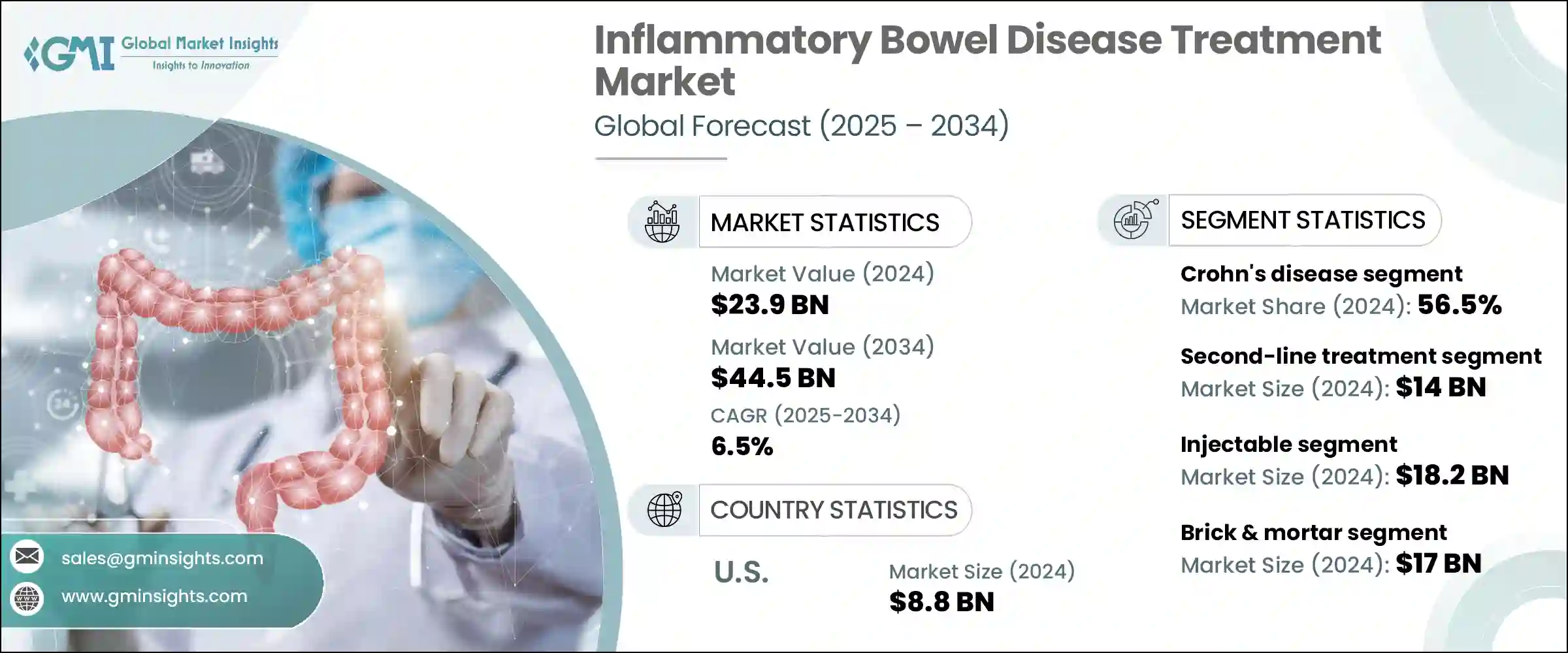
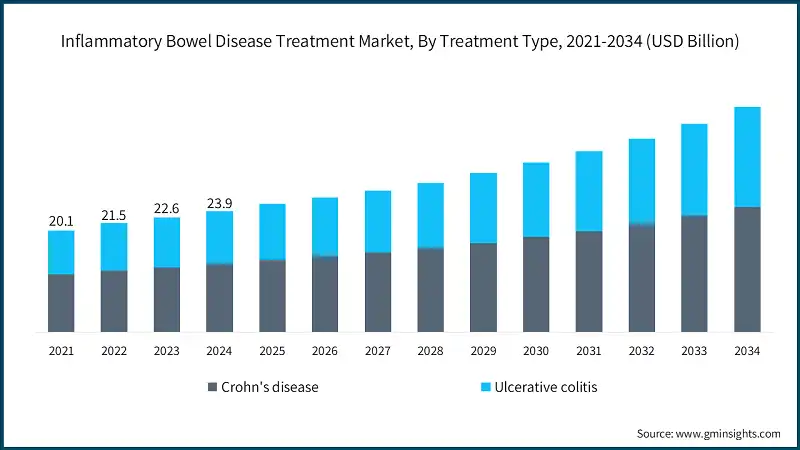
The global inflammatory bowel disease treatment market was valued at USD 23.9 billion in 2024. The market is expected to reach from USD 25.3 billion in 2025 to USD 44.5 billion in 2034, growing at a CAGR of 6.5% during the forecast period. The high is attributed to the several factors including increasing prevalence of IBD, favorable reimbursement policies, and growing awareness and early diagnosis of IBD symptoms.
To get key market trends
IBD treatment market is fueled by various growth drivers and innovation drivers. One of the key drivers is the increasing global incidence of IBD, such as Crohn's disease and ulcerative colitis, particularly in developed countries because of dietary habits, environmental factors, and lifestyle modifications. The increase in the patient population drives demand for efficient therapeutic interventions.
Inflammatory Bowel Disease Treatment Market Report Attributes
| Key Takeaway | Details |
|---|---|
| Market Size & Growth | |
| Base Year | 2024 |
| Market Size in 2024 | USD 23.9 Billion |
| Forecast Period 2025 - 2034 CAGR | 6.5% |
| Market Size in 2034 | USD 44.5 Billion |
| Key Market Trends | |
| Growth Drivers |
|
| Pitfalls & Challenges |
|
What are the growth opportunities in this market?
Innovations in biologic therapies, notably monoclonal antibodies against specific inflammatory targets including TNF-α, IL-12/23, and integrins, have transformed treatment practices with enhanced efficacy and reduced toxicity. The launch and continued development of next-generation biologics and small molecules including JAK inhibitors and S1P receptor modulators similarly drive market growth.
In addition, rising R&D investments by pharmaceutical companies, along with strategic partnerships and acquisitions, are fueling innovation in the market. Improved awareness among patients and physicians about IBD, driven by patient advocacy groups and public health campaigns promoting early diagnosis and disease management is further supporting market growth. Government support through funding, faster regulatory approvals, and pro-reimbursement policies is also enhancing access to newer therapies.
Moreover, advances in personalized medicine, biomarker-guided therapy choice, and non-invasive diagnostics are bringing IBD care into line with precision medicine trends. The increased healthcare infrastructure expansion and improving access to health insurance in emerging economies are creating new growth opportunities for treatment suppliers. Additionally, expanding incidence of IBD among pediatric and geriatric populations has prompted the creation of age-related treatment guidelines. The spread of telemedicine and digital health solutions for chronic disease management also enhances treatment compliance and tracking, facilitating long-term disease control. Collectively, these drivers are transforming the IBD treatment market, fostering steady growth and creating potential for therapeutic innovation and regional market differentiation.
Inflammatory Bowel Disease (IBD) treatment is the medical management of chronic gastrointestinal tract inflammatory conditions, including mainly Crohn's disease and ulcerative colitis. Treatment is to minimize inflammation, control symptoms, and induce long-term remission with drugs like aminosalicylates, corticosteroids, immunomodulators, biologics, and targeted small molecules in conjunction with diet, lifestyle, and occasionally surgery.
Inflammatory Bowel Disease Treatment Market Trends
The rising incidence of inflammatory bowel disease (IBD) is one of the key drivers that are driving the development of the IBD treatment market. IBD, such as crohn's disease and ulcerative colitis, has recorded a notable increase in incidence and prevalence among developed and developing countries.
- This increase is largely due to reasons like urbanization, altered dietary patterns, environmental factors, and genetic tendencies. In developed nations like the U.S., Canada, the UK, and Western Europe, the disease burden is already high and is further increasing steadily. In contrast, newly industrialized countries in the Middle East, Latin America, and Asia are experiencing a sudden surge of IBD cases, primarily fueled by diet and lifestyle modifications. This shift in epidemiology is widening the patient base and strengthening the call for effective treatments.
- In addition, greater awareness, improved diagnostic technology, and higher healthcare availability are leading to earlier diagnosis and long-term control of the disease. Consequently, there is increasing demand for sophisticated pharmaceuticals, such as biologics, small molecules, and biosimilars that can provide enhanced symptom control and mucosal healing.
- The relapsing-remitting nature and chronicity of IBD require ongoing treatment, further driving market growth. In addition, increased emphasis on personalized medicine and disease monitoring has created innovation in targeted therapy and companion diagnostics, which further increases treatment effectiveness and patient response.
- Governments, healthcare systems, and private industry continue to invest in research and development to meet the emerging IBD burden, opening the door for new drug approvals and therapy innovation. Together, the increase in global prevalence of IBD, particularly in countries that have earlier reported low incidence, is of significant influence in propelling demand for state-of-the-art and affordable treatment options, thus fueling growth in the global IBD treatment market.
Inflammatory Bowel Disease Treatment Market Analysis
Learn more about the key segments shaping this market
Based on treatment type, the market is bifurcated into crohn's disease, and ulcerative colitis. The crohn's disease segment has asserted its dominance in the market by securing a significant market share of 56.5% in 2024 and is anticipated to grow at a CAGR of 6.3% over the forecast years.
- The rising global incidence of Crohn's disease, especially in North America and Europe, is a major driver of this segment's rise. Some studies have shown a sudden increase in incidence among younger groups, with diagnosis most commonly made between adolescence and early adulthood, requiring treatment and follow-up over many years.
- Crohn's disease is generally more severe and complex than ulcerative colitis since it can involve any segment of the GI tract and invade deeper bowel wall layers. It tends to necessitate sophisticated treatment plans, such as immunosuppressants and biologics, that have higher market value.
- New biologic treatments and small molecules, such as Janus kinase (JAK) inhibitors and anti-integrin drugs, have revolutionized disease management significantly and have driven segment growth. The increased adoption of combination therapy, drug monitoring, and customized treatment strategies have added to the treatment outcomes as well.
- Growing patient and healthcare provider awareness, combined with enhanced diagnostic capabilities, has also contributed to earlier diagnosis and treatment. Additionally, research and clinical trial investments aimed at solving unmet needs, refractory cases of Crohn's and pediatric disease are anticipated to fuel long-term expansion.
- Together, the chronic and intermittent course of Crohn's disease, its multifaceted pathophysiology, and the increasing need for novel, effective treatments have made this segment a leading force in the overall IBD treatment market.
Based on drug class, the inflammatory bowel disease treatment market is classified into first-line treatment, second-line treatment, and combination therapy. The second-line treatment segment accounted for the highest market revenue of USD 14 billion in 2024 and is poised to grow at a CAGR of 6.8%.
- The growth is led by the rising incidence of severe to moderate cases of ulcerative colitis and crohn's disease, in which first-line treatments like aminosalicylates and corticosteroids prove ineffective or insufficient. When treatment resistance, relapse, or side effects occur in initial treatments, clinicians are opting more and more for advanced biologics and targeted therapies that fall under second-line treatment.
- TNF inhibitors like infliximab and adalimumab continue to be popular because of their established efficacy in inhibiting inflammation and inducing remission in drug-resistant patients. Further, more recent classes such as IL inhibitors (e.g., ustekinumab) and JAK inhibitors (e.g., tofacitinib, upadacitinib) are also picking up in terms of popularity owing to targeted modes of action, good safety profiles, and oral formulations, particularly in ulcerative colitis.
- Anti-integrin treatments such as vedolizumab provide gut-selective immunosuppression, and hence are most suitable to be used long-term with fewer systemic side effects. The ongoing broadening of clinical applications, positive reimbursement guidelines, and increasing physician experience are also further fueling the adoption of these treatments. Additionally, more investment in R&D has resulted in a strong pipeline of second-line therapies for IBD, encouraging innovation and treatment options.
- Increased awareness of precision medicine and personalized therapeutic approaches is also driving the adoption of second-line medications that are specifically designed to individual patient profiles and disease severity, perpetuating this segment's market dominance.
Based on route of administration, the inflammatory bowel disease treatment market is bifurcated into injectable and oral. The injectable segment accounted for the highest market revenue of USD 18.2 billion in 2024 and is poised to grow at a CAGR of 6.4%.
- The reason for this predominance lies in the predominant use of biologic therapies, specifically monoclonal antibodies, which are most commonly administered through injection. Biologics like infliximab, adalimumab, vedolizumab, and ustekinumab have transformed IBD therapy through the introduction of targeted mechanisms of action that offer better efficacy in inducing and maintaining remission in moderate to severe crohn's disease and ulcerative colitis.
- These injectable biologic agents are preferred because they can diminish inflammation at the molecular level and provide long-term disease control when conventional agents are ineffective. Furthermore, the relapsing and chronic nature of IBD requires long-term treatment options, making injectables the go-to choice given their extended dosing intervals and better patient compliance.
- The increase in biosimilars coming to market is also contributing to greater accessibility and affordability, further driving segment growth. Additionally, the growing incidence of IBD, particularly in North America and Europe, and increased patient and physician awareness of the benefits of biologics drive the need for growing injectable therapy use.
- Advances in delivery technology, including subcutaneous auto-injectors and prefilled syringes, enhance convenience and safety, and are thus facilitating greater uptake. Individually, the high effectiveness, novel delivery systems, and increasing patient population contribute to injectables as a driving force in the changing paradigm of IBD treatment.
Learn more about the key segments shaping this market
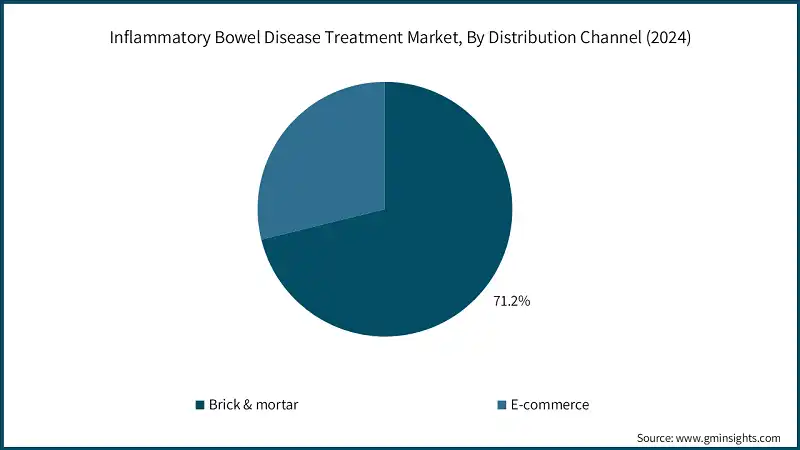
Based on distribution channel, the inflammatory bowel disease treatment market is bifurcated into brick & mortar and e-commerce. The brick & mortar segment dominated the market in 2024 and accounted for USD 17 billion and is anticipated to grow at a CAGR of 6.3% during the forecast period.
- This leading position owes largely to patient demand for personal consultations and entrenched retail pharmacy infrastructure, which guarantees instant access to medications prescribed. Brick and mortar distribution channels, such as hospitals, retail pharmacies, and specialty clinics, provide one-on-one interactions with pharmacists and healthcare professionals that allow enhanced disease management through live counseling and medication monitoring.
- Additionally, chronic illnesses such as IBD may necessitate ongoing medical monitoring, physical check-ups, and prescription changes, which drive the use of physical healthcare sites within treatment. Patients' familiarity and trust with the conventional pharmacies and the opportunity to sort out insurance and reimbursement matters face-to-face also make this channel stronger.
- Moreover, physical stores typically carry a broad selection of sophisticated biologics, immunosuppressants, and supportive therapies, allowing for quality patient care. Growing healthcare infrastructure in emerging markets, along with increased specialty pharmacy chain and hospital-dispensary growth, is also fueling segment growth.
- Additionally, governments and private healthcare providers continue to invest in the development of retail distribution networks, ensuring access to medications in urban and semi-urban markets. Physician preference in writing scripts for medications dispensed through regulated and highly controlled channels of pharmacy outlets makes the segment more attractive.
- In all, the brick & mortar segment's sustained dominance in the market for the treatment of IBD is determined by ongoing dependence on brick & mortar pharmacies for the management of chronic disease, high regulatory compliance, and patient-provider relationships based on confidence.
Looking for region specific data?
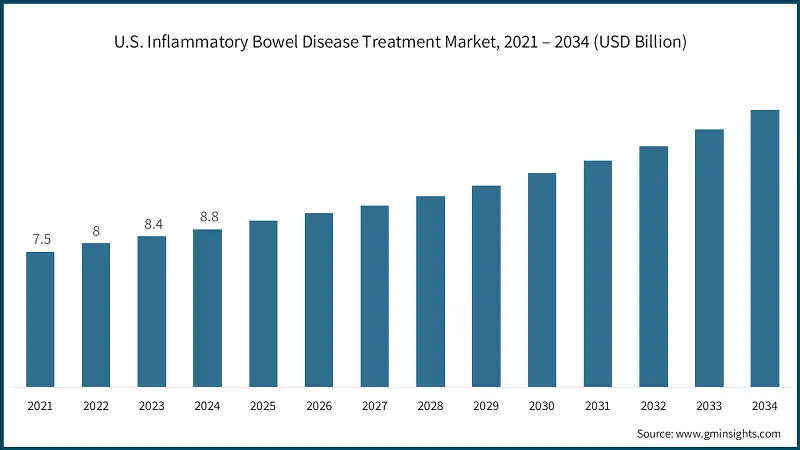
U.S. inflammatory bowel disease treatment market was valued at USD 7.5 billion and USD 8 billion in 2021 and 2022, respectively. The market size reached USD 8.8 billion in 2024, growing from USD 8.4 billion in 2023.
- The trend is largely fueled by the growing incidence of IBD, both Crohn's disease and ulcerative colitis, among millions of Americans. Increased disease burden is reinforced by enhanced awareness, early diagnosis, and increased availability of specialty care centers nationwide. In addition, broad use of biologics and targeted therapies has revolutionized IBD management by providing better disease control and increased duration of remission.
- Advances in drug delivery systems, including subcutaneous injections and extended-release formulations, have improved patient compliance and outcomes as well. Also driving growth are the increased focus on targeted treatments and personalized medicine, whereby clinicians use biomarkers and genetic analysis to individualize treatment protocols.
- Also supporting drug development and commercialization are robust research investment, favorable reimbursement systems, and the presence of multinational players such as AbbVie, Johnson & Johnson, and Pfizer. Regulatory incentives from the FDA, such as fast-track designations and approvals for new drugs, also speed market expansion.
- Together, these elements are creating a strong and vibrant U.S. IBD treatment market.
Europe inflammatory bowel disease treatment market accounted for USD 6.7 billion in 2024 and is anticipated to show lucrative growth over the forecast period.
- The most significant of these is the high and increasing incidence of IBD in the region, especially in Western Europe, where nations such as the UK, Germany, and France have some of the highest incidence rates in the world. A surging population and growing consciousness of gastrointestinal wellness are driving diagnosis at an earlier stage and long-term management of the disease.
- Further, Europe's mature healthcare system and conducive reimbursement environment enable patient access to more intensive therapies like biologics and biosimilars, which are extensively used as effective treatments for moderate to severe IBD. Innovating investments in research and development by pharma companies as well as public health organizations are speeding up the approval of innovative, targeted therapies with enhanced efficacy and safety.
- The broadening of clinical guidelines and embracing of personalized treatment approaches are also encouraging innovation in therapy optimization and disease monitoring. Rising partnerships between academic institutions and biotech companies in Europe are further strengthening the treatment pipeline. These trends, along with increased healthcare spending and regulatory favor towards new therapies, are likely to contribute strongly towards the growth of Europe's IBD treatment market.
The UK inflammatory bowel disease treatment market in Europe is projected to grow remarkably in the coming years.
- The UK IBD treatment market is expected to expand significantly in the future with a mix of clinical, demographic, and healthcare system-related drivers. The nation has among the highest prevalence rates of IBD in Europe, with more than 500,000 individuals now living with Crohn's disease or ulcerative colitis. The increasing disease burden is driving the need for new treatment solutions, such as biologics, biosimilars, and targeted therapies.
- The National Health Service (NHS) is also increasingly embracing advanced biologic therapies and increasing access to early diagnosis and personalized treatment. Government action to enhance IBD management and national clinical guidance through NICE are facilitating timely evidence-based treatment interventions.
- In addition, the strong research facilities of the UK and associations with international pharmaceutical companies ensure ongoing drug discovery and clinical trials. All these, along with rising awareness among patients and digital health incorporation, are fueling market expansion of the UK’s IBD treatment market.
The Asia Pacific inflammatory bowel disease treatment market is anticipated to grow at the highest CAGR of 7.5% during the analysis timeframe.
- Countries such as China, India, Japan, and South Korea are witnessing increasing incidence rates, largely attributed to urbanization, changing dietary habits, environmental pollution, and lifestyle shifts. As healthcare infrastructure improves and awareness about gastrointestinal disorders increases, more patients are being diagnosed and treated for IBD.
- Furthermore, government initiatives and increasing healthcare expenditure are supporting access to advanced therapies, including biologics and biosimilars. The growing presence of pharmaceutical companies and strategic partnerships for research and development are also contributing to market growth.
- Additionally, increasing patient affordability, expanding medical tourism, and supportive regulatory frameworks in countries like Japan and Australia are fostering the adoption of innovative treatment modalities, making the region a key growth hub for IBD therapies.
China holds a dominant position in the Asia Pacific inflammatory bowel disease treatment market.
- China holds a dominant position in the Asia Pacific inflammatory bowel disease (IBD) treatment market, driven by a combination of rising disease prevalence, healthcare infrastructure expansion, and increased access to advanced therapies. With rapid urbanization and westernization of dietary habits, the incidence of IBD in China has significantly increased over the past decade.
- Growing awareness among patients and healthcare providers, along with improvements in diagnostic capabilities, has led to earlier identification and more effective disease management. The Chinese government's strong focus on healthcare reforms, particularly through programs like Healthy China 2030, has improved access to biologics and other innovative IBD treatments.
- Additionally, the presence of local pharmaceutical companies investing in biosimilars and domestic production of biologics is enhancing affordability and market penetration. China's large patient pool, expanding middle class, and increased healthcare spending are collectively driving strong demand for IBD therapies, positioning the country as a key growth engine in the regional market.
The Brazil inflammatory bowel disease treatment market is experiencing robust growth in Latin America market.
- The Brazil inflammatory bowel disease (IBD) treatment market is witnessing robust growth within the Latin America region, driven by several key factors. One of the primary drivers is the increasing prevalence of IBD, particularly among the urban population, due to changes in dietary patterns, lifestyle habits, and environmental exposures. Improved access to healthcare services and diagnostic facilities in Brazil has led to earlier detection and diagnosis of Crohn’s disease and ulcerative colitis, boosting the demand for treatment options.
- Additionally, rising awareness about chronic gastrointestinal disorders and greater physician engagement are encouraging patients to seek timely medical intervention. Brazil’s expanding public and private healthcare infrastructure, coupled with government efforts to include IBD therapies in reimbursement frameworks, is further accelerating market expansion.
- The growing availability of biologics and biosimilars in the country is enhancing treatment efficacy and accessibility, while ongoing clinical research and international collaborations are also contributing to innovation and therapeutic advancements in the Brazilian IBD market.
Saudi Arabia inflammatory bowel disease treatment market is poised to witness substantial growth in Middle East and Africa market during the forecast period.
- The Saudi Arabia IBD treatment market is poised to witness substantial growth within the MEA region during the forecast period, driven by multiple key factors. The rising incidence of IBD, particularly among the younger population, is linked to increasing urbanization, westernized dietary patterns, sedentary lifestyles, and environmental changes. Improved awareness and better diagnostic capabilities across the country have led to earlier detection and a growing number of identified cases, contributing to heightened demand for effective treatment options.
- Moreover, the government’s strong focus on healthcare infrastructure development under Vision 2030 has enhanced access to specialized care, including gastroenterology services. Increased investment in biologics, immunomodulators, and targeted therapies, along with expanding partnerships between international pharmaceutical companies and local healthcare providers, is further fueling market growth.
- Collectively, these developments are positioning Saudi Arabia as a leading contributor to the growth of the IBD treatment market in the MEA region.
Inflammatory Bowel Disease Treatment Market Share
The global market is moderately consolidated, with prominent companies leading space, while innovation continues to thrive among emerging players and specialized firms. Major market participants such as AbbVie, Amgen, Biogen, CELLTRION holds around 20-25% market share in the global market. The market is shaped by increasing competition in biologics and biosimilars, with companies focusing on expanding their IBD portfolios to include advanced therapies targeting specific inflammatory pathways. The emergence of small molecule drugs, novel oral therapies, and personalized treatment approaches is further intensifying the competitive landscape.
Strategic collaborations, licensing agreements, and regional expansions are commonly adopted to enhance market penetration. Moreover, regulatory support for accelerated approvals and strong R&D investments are encouraging the development of innovative products. While established firms dominate revenue share, newer entrants are disrupting traditional treatment paradigms by addressing unmet clinical needs, improving patient compliance, and offering cost-effective alternatives.
Inflammatory Bowel Disease Treatment Market Companies
Prominent players operating in the inflammatory bowel disease treatment industry include:
- AbbVie
- Amgen
- Biogen
- CELLTRION
- Dr Falk
- Ferring
- Johnson & Johnson
- Lilly
- Merck
- Novartis
- Pfizer
- Takeda
- Tillotts Pharma
- UCB
- AbbVie: AbbVie's key strength in the IBD treatment market lies in its established biologic therapies, particularly those targeting TNF-alpha pathways. The company leverages a strong clinical pipeline, lifecycle management strategies, and global reach to maintain a competitive edge. Its focus on sustained innovation and long-term safety data supports its leadership in both Crohn’s disease and ulcerative colitis treatment segments.
- Amgen: Amgen differentiates itself in the IBD market through its biosimilars portfolio and immunology expertise. Its biologic and biosimilar offerings provide more affordable alternatives while maintaining therapeutic efficacy, enabling broader patient access. The company also emphasizes advanced molecular research, personalized treatment approaches, and collaborations that enhance its presence in the inflammatory and autoimmune therapeutic space.
Inflammatory Bowel Disease Treatment Industry News:
- In June 2024, AbbVie and FutureGen Biopharmaceutical Co., Ltd. announced a license agreement to develop FG-M701, a next-generation TL1A antibody for the treatment of IBD currently in preclinical development. This agreement may help the company tap into new operating segments and enhance business revenue.
- In May 2023, Amgen and TScan Therapeutics, Inc. announced a multi-year collaboration that will use TScan's proprietary target discovery platform, TargetScan, to identify the antigens recognized by T cells in patients with Crohn's disease. This collaboration helped the company to acquire an enhanced customer base by employing advanced technologies.
The inflammatory bowel disease treatment market research report includes an in-depth coverage of the industry with estimates and forecast in terms of revenue in USD Million and from 2021 – 2034 for the following segments:
Market, By Treatment Type
- Crohn's disease
- Ulcerative colitis
Market, By Drug Class
- First-line treatment
- Aminosalicylates
- Corticosteroids
- Second-line treatment
- TNF inhibitors
- IL inhibitors
- JAK inhibitors
- Anti-integrin
- Combination therapy
- TNF inhibitors + thiopurines
- Other combination therapies
Market, By Route of Administration
- Injectable
- Oral
Market, By Distribution Channel
- Brick & mortar
- E-commerce
The above information is provided for the following regions and countries:
- North America
- U.S.
- Canada
- Europe
- Germany
- UK
- France
- Spain
- Italy
- Netherlands
- Asia Pacific
- China
- Japan
- India
- Australia
- South Korea
- Latin America
- Brazil
- Mexico
- Argentina
- Middle East and Africa
- South Africa
- Saudi Arabia
- UAE
Frequently Asked Question(FAQ) :
Which disease segment led the inflammatory bowel disease treatment market?
Crohn’s disease accounted for 56.5% market share in 2024 and is expected to grow at a CAGR of 6.3%, owing to its more complex and relapsing nature, requiring long-term treatment with biologics and immunosuppressants.
What is the CAGR of the inflammatory bowel disease treatment market between 2025 and 2034?
The market is expected to expand at a CAGR of 6.5% from 2025 to 2034, driven by growing patient awareness, improved diagnostics, and widespread use of advanced biologics and biosimilars.
How much is the global inflammatory bowel disease treatment market projected to be worth by 2034?
The market is projected to grow to USD 44.5 billion by 2034, as adoption of second-line treatments, biologics, and personalized medicine continues to rise globally.
What was the market size of the inflammatory bowel disease treatment industry in 2024?
The global inflammatory bowel disease treatment market was valued at USD 23.9 billion in 2024, driven by increasing prevalence of Crohn’s disease and ulcerative colitis, along with expanded use of biologics and small molecule therapies
What is the estimated value of the inflammatory bowel disease treatment industry in 2025?
The inflammatory bowel disease treatment market is expected to reach USD 25.3 billion in 2025, supported by rising diagnosis rates, technological innovation, and demand for targeted drug therapies.
What was the revenue generated by the second-line treatment segment?
Second-line treatments generated USD 14 billion in revenue in 2024, dominating the drug class segment due to their effectiveness in moderate to severe IBD cases and widespread use of TNF, JAK, and IL inhibitors.
What was the market value of injectable treatments in 2024?
Injectable therapies accounted for USD 18.2 billion in 2024, largely driven by the continued success of monoclonal antibodies and the increasing availability of biosimilars for long-term disease control.
What distribution channel dominated the inflammatory bowel disease treatment market?
Brick & mortar distribution channels led with USD 17 billion in 2024, benefiting from integrated hospital and pharmacy networks that support in-person consultations and prescription fulfillment.
What are the major growth drivers of the inflammatory bowel disease treatment market?
Key drivers include the increasing global prevalence of IBD, technological advances in targeted therapies, favorable reimbursement policies, and the growing adoption of precision diagnostics.
Who are the leading companies in the inflammatory bowel disease treatment industry?
Major players include AbbVie, Amgen, Biogen, CELLTRION, Johnson & Johnson, Pfizer, Takeda, UCB, Novartis, and Ferring. These companies focus on innovation in biologics, combination therapies, and personalized treatment options across global markets.